
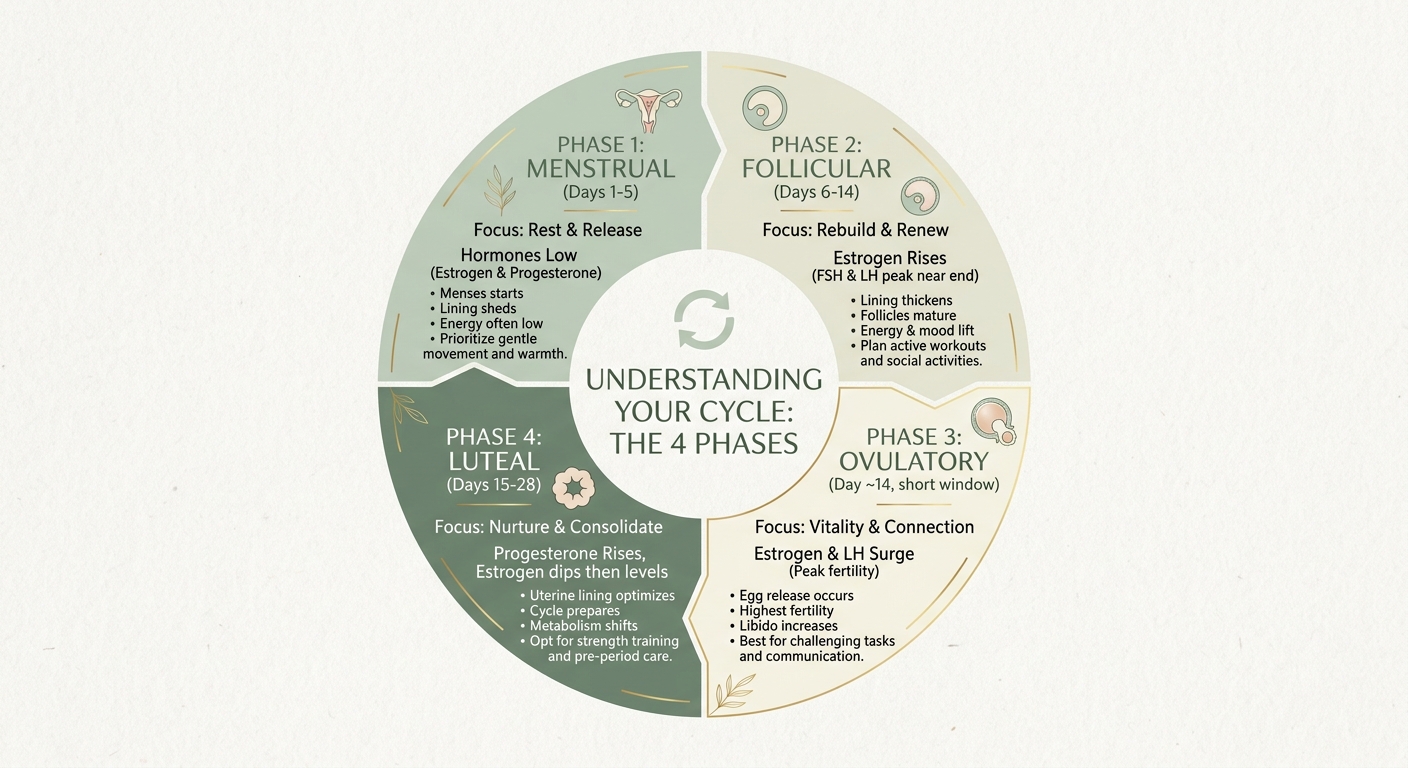
The 4 phases of the menstrual cycle are Menstrual, Follicular, Ovulatory, and Luteal. Understanding these four stages helps you track hormones, symptoms, fertility, and overall menstrual health.
For decades, women were taught to focus only on the few days of their period. But your menstrual cycle is a 24/7 hormonal symphony that influences your brain chemistry, metabolic rate, and emotional resilience. In 2026, we are moving beyond simple tracking; we are entering the era of cycle literacy.
Understanding the 4 distinct phases of your cycle Menstrual, Follicular, Ovulatory, and Luteal is the most powerful tool you have for reclaiming your energy and mental clarity. Here is the science of your rhythm, explained.
4 Phases of The Menstrual Cycle
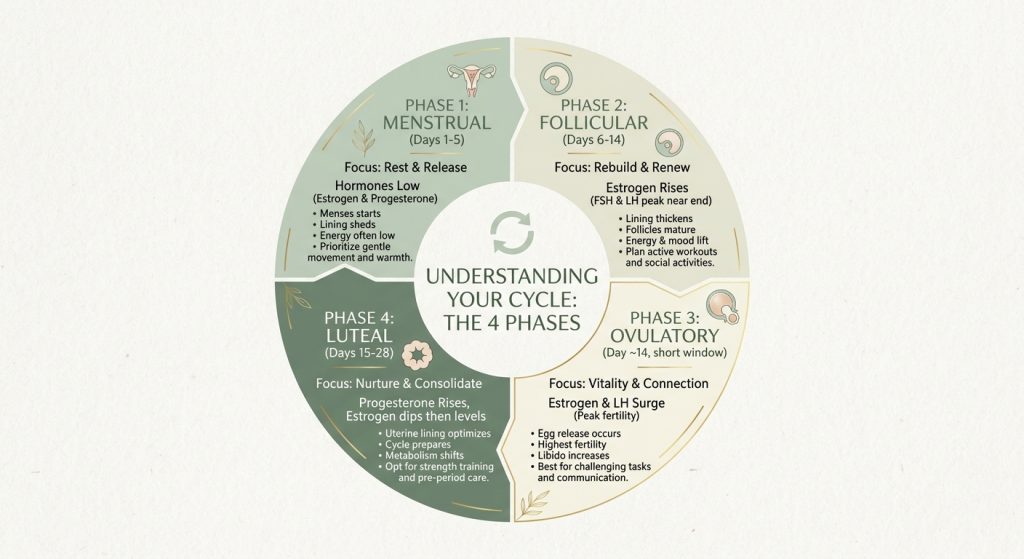
1. The Menstrual Phase: The Time of Release
The Science: Your 4 phases of menstrual cycle begins on the first day of your period. At this point, estrogen and progesterone are at their lowest levels. Your body is working hard to shed the uterine lining that was prepared for a potential pregnancy.
The “Why” Behind the Feeling: Because your hormones are at a baseline low, your energy is naturally diverted inward. This isn’t “laziness”; it is a physiological requirement for rest. Your body is undergoing an inflammatory process to shed the lining, which is why you may feel a desire for solitude and quiet.
Wellness Focus: Nutrition: Prioritize iron-rich foods like grass-fed beef, lentils, or dark leafy greens. You are losing blood, and replenishing iron helps prevent the “period fatigue” that many mistake for simple exhaustion.
Movement: Stick to restorative practices. Gentle stretching or a slow walk helps move blood through the pelvic region without overtaxing your nervous system while your energy stores are low.
2. The Follicular Phase: The Rise of Potential
The Science: Once your bleeding stops, your brain releases Follicle-Stimulating Hormone (FSH). This tells your ovaries to prepare an egg for release. As this happens, your estrogen levels begin a steady climb.
The “Why” Behind the Feeling: Estrogen is a “growth” hormone. It doesn’t just thicken your uterine lining; it also boosts the production of serotonin and dopamine in your brain. This is why you suddenly feel more optimistic, creative, and social. Your brain is physically more “plastic” and open to new ideas during this window.
Wellness Focus:
Nutrition: Support your rising estrogen with fermented foods like kimchi or sauerkraut. These aid the gut microbiome in processing hormones efficiently, preventing the “estrogen dominance” that can lead to heavier periods later.
Movement: This is the time to try something new. Your coordination and learning capacity are higher now, making it the perfect phase for a new workout class or a challenging hike.
3. The Ovulatory Phase: Your Biological Peak
The Science: This is the shortest phase, lasting only about 24 to 48 hours. A surge in Luteinizing Hormone (LH) triggers the release of the egg. Estrogen and testosterone reach their highest points in your entire cycle.
The “Why” Behind the Feeling: High estrogen makes your skin glow and your hair look vibrant, while the peak in testosterone increases your libido and confidence. Evolutionarily, this was designed to make you more social and attractive to a partner, but in a modern context, it’s your “power window” for public speaking, negotiations, or social events.

Wellness Focus:
Nutrition: Your metabolism is slightly slower during ovulation, but your energy is high. Focus on anti-inflammatory foods like berries and wild-caught salmon to support the physical stress of the LH surge.
Movement: This is your window for high-intensity interval training (HIIT) or heavy lifting. Your muscles recover faster, and your stamina is at its peak.
4. The Luteal Phase: The Power of Preparation
The Science: After ovulation, the empty follicle transforms into the corpus luteum, which pumps out progesterone. Progesterone’s job is to keep the uterine lining stable.
The “Why” Behind the Feeling: Progesterone is a natural sedative. It calms the nervous system, which is why you might feel more “nest-oriented” and less social. However, if pregnancy doesn’t occur, the sudden drop in both estrogen and progesterone toward the end of this phase can cause the irritability and cravings known as PMS. Your basal body temperature also rises, and your resting heart rate increases, meaning your body is working harder even at rest.

Wellness Focus:
Nutrition: You may notice increased hunger. This is because your resting metabolic rate increases by 5-10% during the luteal phase. Honor this by eating complex carbohydrates like sweet potatoes, which help stabilize blood sugar and reduce mood swings.
Movement: Transition to strength training or Pilates. Avoid extreme cardio toward the end of this phase, as high cortisol levels can worsen PMS symptoms and lead to burnout.
Empowering Your Flow: Your cycle is not a burden; it is a blueprint. When you stop fighting your biology and start working with it, you move from a state of constant struggle to a state of flow. Whether you are planning a high-stakes meeting or a weekend of rest, let your hormones be your guide of 4 phases of the menstrual cycle.
Learning the 4 phases of the menstrual cycle can help you understand hormonal changes, energy levels, fertility signs, and period symptoms more accurately
Medical Disclaimer: The information 4 phases of menstrual cycle provided by PeriodPicks is for educational and informational purposes only and is not intended as medical advice. Always seek the advice of your physician or other qualified health provider with any questions you may have regarding a medical condition or menstrual health concerns.
Frequently Asked Questions
How do I know which phase I am in if my cycle is irregular?
Tracking your basal body temperature (BBT) and cervical mucus is more accurate than a calendar. A rise in temperature usually indicates you have entered the Luteal phase.
Does cycle syncing work if I am on hormonal birth control?
Hormonal contraceptives suppress your natural ovulation, meaning you don’t experience these four distinct hormonal shifts. However, you can still practice “lifestyle syncing” by following a consistent self-care routine that mimics these natural rhythms.
Have questions? Contact us here