
What Counts as an Irregular Period?
Quick Summary: In clinical medicine, an irregular period is defined as a menstrual cycle that consistently falls outside the standard adult window of 21 to 35 days, varies in length by more than 7 to 9 days from month to month, lasts longer than 8 days, or stops completely for 3 consecutive months. While an occasional cycle delay caused by temporary stress, travel, or illness is completely normal, persistent irregularity points to an interruption in regular ovulation driven by hormonal, metabolic, lifestyle, or anatomical factors.
If you have ever opened a period tracking app and noticed that your period arrived six days earlier than expected—or failed to show up for an entire month—you have likely wondered: Is this normal, or is my cycle irregular?
The idea that every healthy woman has a rigid, 28-day cycle is one of the most persistent health myths. In reality, human reproductive biology is inherently dynamic. A cycle that arrives every 24 days for one person can be just as healthy as a cycle that arrives every 32 days for another. However, when your cycle timing becomes unpredictable, remarkably short, or extended across multiple months, your body is communicating through its hormonal feedback loops.
Major health organizations, including the(ACOG), recognize the menstrual cycle as a vital sign—an essential indicator of overall health alongside blood pressure, pulse, and body temperature. Understanding what medically counts as an irregular period empowers you to distinguish between minor physiological fluctuations and underlying health concerns that require professional evaluation.
This comprehensive guide covers the five clinical criteria for irregular periods, how cycle patterns shift across your lifespan, common lifestyle and medical triggers, and the exact steps to take when seeking medical guidance.
Understanding Your Menstrual Baseline: What Is a “Normal” Cycle?
To evaluate what counts as an irregular period, you first need a clear definition of a regular menstrual baseline.
Your menstrual cycle length is measured from the first day of full menstrual bleeding in one period up to (but not including) the first day of full menstrual bleeding in your next period.
| Metric | Healthy Adult Baseline | Healthy Adolescent Baseline |
| Cycle Length Range | 21 to 35 days | 21 to 45 days |
| Bleeding Duration | 2 to 7 days | 2 to 7 days |
| Month-to-Month Variance | Within 2 to 7 days | Within 7 to 10 days |
| Average Blood Loss | 30 to 40 mL (2–3 tablespoons) | 30 to 40 mL |
To establish your baseline and determine whether your personal cycle length fluctuates significantly, you can calculate your multi-month average using our interactive Cycle Length Calculator.
The Biological Engine: Follicular vs. Luteal Phase Mechanics
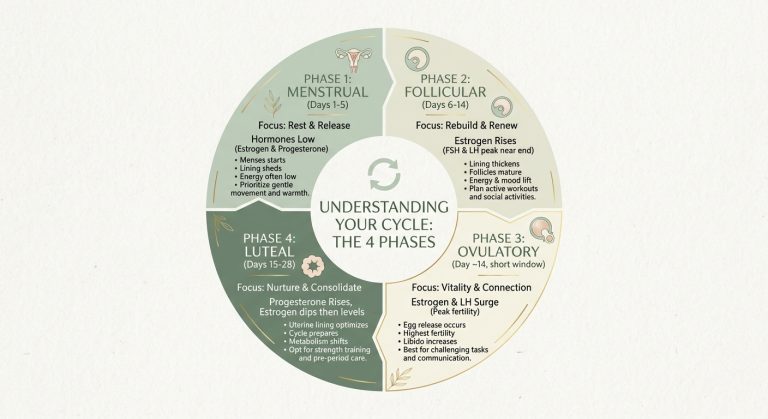
Why do cycle lengths vary? The answer lies in the hormonal coordination between your brain (the hypothalamus and pituitary gland) and your ovaries—known as the hypothalamic-pituitary-ovarian (HPO) axis.
The cycle is divided into two primary phases separated by ovulation:
- The Follicular Phase (Variable): Starts on Day 1 of your period and continues until ovulation. Driven by follicle-stimulating hormone (FSH) and rising estrogen, ovarian follicles mature. The length of this phase can easily expand or shrink based on stress, sleep, nutrition, and illness.
- The Luteal Phase (Fixed): Begins after ovulation. The collapsed follicle forms the corpus luteum, which secretes progesterone for a remarkably consistent 12 to 14 days.
Because the luteal phase remains strictly fixed in duration, a late or irregular period almost always means that your body took longer to ovulate, or failed to ovulate at all (an anovulatory cycle).
The 5 Clinical Criteria: What Medically Counts as an Irregular Period?
Gynecologists and reproductive endocrinologists use five specific criteria to diagnose irregular bleeding patterns. According to the National Institute of Child Health and Human Development (NICHD), if your cycle consistently meets one or more of these criteria, it is clinically classified as irregular.
| Clinical Criterion | Medical Term | Definition / Threshold | Typical Physiological Implication |
| 1. Unpredictable Length Variance | High Cycle Variability | Length varies by >7 to 9 days month-to-month | Inconsistent follicular development or sporadic ovulation |
| 2. Consistently Short Cycles | Polymenoress / Short Cycle | Cycle duration is under 21 days | Abnormally short follicular phase or anovulatory bleeding |
| 3. Consistently Long Cycles | Oligomenorrhea | Cycle duration is over 35 days | Delayed ovulation or infrequent egg release |
| 4. Completely Missing Periods | Secondary Amenorrhea | No bleeding for 3+ consecutive months | Suppressed HPO axis, PCOS, POI, or endocrine dysfunction |
| 5. Abnormal Flow Parameters | Abnormal Uterine Bleeding (AUB) | Flow >8 days, menorrhagia, or intermenstrual spotting | Uterine polyps, fibroids, adenomyosis, or clotting issues |
. Unpredictable Cycle Length Variations (Shifting Between Short and Long)
It is completely normal for your cycle length to vary by 2 to 4 days from month to month (for instance, a 27-day cycle followed by a 30-day cycle). However, if the difference between your shortest cycle and your longest cycle over a six-month window is greater than 7 to 9 days, your cycle is considered irregular.
- Example of a Regular Pattern: 28 days, 26 days, 29 days, 27 days (Variance: 3 days = Regular).
- Example of an Irregular Pattern: 22 days, 36 days, 24 days, 39 days (Variance: 17 days = Irregular).
2. Cycles That Are Consistently Too Short (<21 Days)
Clinically termed polymenorrhea, experiencing a cycle length shorter than 21 days means you are menstruating too frequently. Short cycles usually indicate that the follicular phase was abnormally brief or that an egg was not released at all, resulting in early estrogen-breakthrough bleeding. Frequent bleeding can lead to iron deficiency anemia and physical exhaustion.
3. Cycles That Are Consistently Too Long (>35 Days)
Clinically termed oligomenorrhea, having a cycle that consistently stretches beyond 35 days (e.g., 40, 50, or 60 days between periods) means ovulation is significantly delayed or occurring infrequently. Oligomenorrhea is one of the classic diagnostic indicators of hormonal conditions like Polycystic Ovary Syndrome (PCOS).
4. Missing Periods Completely (Secondary Amenorrhea)
If you previously had a period and then experience a total absence of menstrual bleeding for 3 consecutive months (or 6 months if your periods were historically sporadic), you meet the medical criteria for secondary amenorrhea. Secondary amenorrhea requires a formal clinical evaluation to rule out underlying endocrine or metabolic conditions.
5. Abnormally Heavy, Prolonged, or Spotty Bleeding
Irregularity is not limited to timing—it also applies to bleeding duration and volume:
- Prolonged Bleeding: Menstrual flow that continues for longer than 8 consecutive days.
- Heavy Bleeding (Menorrhagia): Soaking through one or more pads or tampons every hour for two consecutive hours, or regularly passing blood clots larger than a quarter.
- Intermenstrual Spotting: Light or moderate bleeding that occurs between your regular expected periods or after sexual intercourse.
Normal Cycle Irregularity Across Different Life Stages
What constitutes a concerning irregular period depends heavily on your current reproductive stage. Cycle unpredictability is actually a normal physiological feature during specific transitional phases of life.
| Life Stage | Normal Cycle Length Range | Key Biological Mechanism | Clinical Expectations |
| Adolescents (Ages 11–18) | 21 to 45 days | Immature HPO axis; frequent anovulatory cycles | High variability is expected for 2–3 years post-menarche |
| Adults (Ages 19–39) | 21 to 35 days | Fully mature HPO axis; consistent ovulation | Highest predictability; month-to-month variance should stay <7 days |
| Perimenopause (Ages 40+) | Highly variable (<21 to >60 days) | Declining ovarian follicle reserves; fluctuating estrogen | Cycles shorten initially, then lengthen and skip before menopause |
| Postpartum & Lactation | Variable / Absent | Elevated prolactin suppresses GnRH signaling | Amenorrhea during exclusive breastfeeding; irregular return of periods |
Adolescents and Teens (Ages 11–18)
During the first 2 to 3 years after a young girl’s first period (menarche), the HPO axis is biologically immature. The brain and ovaries are establishing their feedback communication loop, and up to 50% of adolescent cycles are anovulatory. For this reason, clinical guidelines define a normal adolescent cycle range as 21 to 45 days. An occasional skipped period or 40-day cycle during high school is generally a normal part of development.
Peak Reproductive Years (Ages 19–39)
By your 20s, your hormonal feedback loop is fully mature. During this stage, your cycle should achieve its maximum predictability, comfortably fitting within the 21-to-35-day window. Persistent variations during these years warrant an evaluation of lifestyle factors, stress, or underlying health conditions.
Perimenopause (Ages 40+)
In your 40s (and occasionally late 30s), ovarian follicle reserves naturally decrease. As estrogen levels fluctuate unpredictably and ovulation becomes sporadic, cycles frequently shorten (e.g., dropping from 28 days to 22 days) before expanding into long, multi-month gaps. This unpredictability is expected during perimenopause, though abnormally heavy bleeding should still be reviewed by a physician.
Postpartum and Lactation
After childbirth, elevated levels of prolactin (the hormone that stimulates breast milk production) suppress GnRH release, blocking ovulation. If you are exclusively breastfeeding, your period may remain absent for several months or over a year—a physiological state known as lactational amenorrhea. Once your period returns, it may take several cycles to regain its pre-pregnancy baseline.
Common Physiological and Lifestyle Factors That Alter Cycle Timing
Because the brain’s hypothalamus actively monitors internal and external environments, routine lifestyle disruptions can temporarily pause or delay ovulation.
1. Psychological Stress and the HPA Axis
Severe emotional, academic, financial, or situational stress activates your hypothalamic-pituitary-adrenal (HPA) axis, sparking a surge in cortisol and corticotropin-releasing hormone (CRH).
High circulating cortisol directly suppresses GnRH pulsatility in the hypothalamus. Without GnRH, your pituitary gland cannot send the FSH and LH signals needed to mature an ovarian follicle, postponing your period by days or weeks.
2. Body Weight, Caloric Restriction, and Low Body Fat
Adipose tissue (body fat) functions as an active endocrine organ that produces estrogen and secretes leptin—a hormone that signals energy sufficiency to the brain.
- Low Body Fat / Severe Caloric Deficit: When body fat drops below a critical threshold or daily food intake falls short of metabolic requirements, leptin levels drop. The hypothalamus interprets low leptin as a starvation state and conserves energy by shutting down reproductive function, causing functional hypothalamic amenorrhea (FHA).
- Rapid Weight Gain: Rapid increases in body weight can raise peripheral estrogen levels and trigger insulin resistance, both of which can disrupt regular ovulation and delay bleeding.
3. High Exercise Volume and Low Energy Availability (RED-S)
Engaging in intense athletic training without consuming enough calories to match your energy expenditure creates a condition known as Relative Energy Deficiency in Sport (RED-S). When energy availability drops below roughly 30 kcal per kilogram of fat-free mass daily, the brain pauses ovulation, leading to extended cycle lengths or missing periods.
4. Travel, Sleep Disruptions, and Circadian Shifts
The master circadian clock in your hypothalamus is sensitive to light exposure and sleep architecture. Crossing multiple time zones (jet lag) or working overnight shift rotations alters melatonin and cortisol rhythms, which can briefly disrupt GnRH pulses and shift your period timing for one or two cycles.
Underlying Medical Conditions Linked to Irregular Cycles
When cycle timing shifts are persistent across multiple months, an underlying endocrine, metabolic, or anatomical condition may be affecting your reproductive health.
| Condition | Underlying Pathology | Menstrual Impact | Accompanying Symptoms |
| Polycystic Ovary Syndrome (PCOS) | Elevated androgens, insulin resistance, anovulation | Oligomenorrhea (>35d) or amenorrhea | Cystic acne, hirsutism, hair thinning, weight gain |
| Hypothyroidism | Deficient thyroid hormone (elevated TSH & prolactin) | Delayed periods, heavy flow, or skipped cycles | Fatigue, cold sensitivity, constipation, dry skin |
| Hyperthyroidism | Excessive thyroid hormone (elevated T3/T4) | Abnormally short, light, or absent cycles | Weight loss, rapid heart rate, heat intolerance, anxiety |
| Hyperprolactinemia | Excess prolactin secretion from pituitary | Delayed periods or secondary amenorrhea | Galactorrhea (breast milk discharge), headaches |
| Primary Ovarian Insufficiency | Premature depletion of ovarian follicles (<40 yrs) | Irregular, sporadic periods transitioning to stoppage | Hot flashes, night sweats, vaginal dryness |
1. Polycystic Ovary Syndrome (PCOS)
Polycystic Ovary Syndrome is one of the most common causes of persistent cycle irregularity, affecting up to 10% of women of reproductive age. According to clinical resources at the Mayo Clinic, PCOS is characterized by elevated androgen levels, insulin resistance, and anovulation.
In individuals with PCOS, ovarian follicles begin to develop but fail to mature or release an egg. Instead, multiple immature follicles remain in the ovaries, causing extended cycles (>35 days), sporadic periods, or complete amenorrhea.
If you are managing PCOS-related cycle changes, our printable PCOS Wellness Planner can help you track symptoms and lifestyle habits alongside medical care.
2. Thyroid Dysfunction (Hypothyroidism and Hyperthyroidism)
The thyroid gland produces hormones (T3 and T4) that govern systemic metabolic speed and interact directly with sex-hormone-binding globulin (SHBG) and ovarian receptors.
- Hypothyroidism (Underactive Thyroid): Low thyroid hormone causes high TSH, which often stimulates excess prolactin release. Elevated prolactin suppresses GnRH, leading to delayed periods, heavy bleeding, or missed cycles.
- Hyperthyroidism (Overactive Thyroid): Excess thyroid hormone increases circulating SHBG, reducing biologically active free estrogen and resulting in unusually light, short, or infrequent cycles.
3. Hyperprolactinemia
Prolactin is the pituitary hormone responsible for stimulating milk production after childbirth. Elevated prolactin levels in a non-pregnant, non-lactating individual—caused by stress, prescription drugs, or a benign pituitary growth (prolactinoma)—directly blocks GnRH release, resulting in delayed or absent periods.
4. Primary Ovarian Insufficiency (POI)
Primary Ovarian Insufficiency occurs when ovarian function declines before age 40. Unlike natural menopause, POI can cause fluctuating ovarian activity where periods stop for several months, return temporarily, and then become sporadic.
5. Endometriosis, Fibroids, and Polyps
While structural conditions inside the pelvis do not typically delay ovulation, they can cause significant irregularities in bleeding duration and volume:
- Uterine Fibroids and Polyps: Benign growths in the muscular wall or lining of the uterus that cause prolonged, heavy bleeding and spotting between periods.
- Endometriosis: Endometrial-like tissue growing outside the uterus, causing painful periods, chronic pelvic discomfort, and irregular spotting.
How Birth Control and Medications Alter Your Cycle
Pharmaceutical medications can directly modify your natural bleeding patterns, as noted by the UK National Health Service (NHS):
- Combined Hormonal Contraceptives (Pills, Patches, Rings): The monthly bleeding experienced while taking combined birth control is a synthetic withdrawal bleed, not a true physiological period.
- Progestin-Only Methods (Hormonal IUDs, Implants, Mini-Pills): Continuous progestin thins the uterine lining, which frequently causes light spotting, infrequent bleeding, or complete period cessation. This is an expected, medically safe side effect.
- Post-Pill Amenorrhea: After stopping oral contraceptives, it can take 3 to 6 months for your brain and ovaries to re-establish regular endogenous ovulation.
- Prescription Drugs: Medications that alter neurotransmitters or prolactin levels—including SSRI antidepressants, antipsychotics, blood pressure medications, and chemotherapy agents—can delay ovulation.
Diagnostic Workup: What to Expect at Your Doctor’s Office
If your cycle is consistently irregular, a healthcare provider will conduct a structured clinical evaluation to determine the underlying cause.
| Diagnostic Category | Specific Clinical Tests | Primary Diagnostic Objective |
| Laboratory Blood Panels | Serum hCG | Definitively rules out early pregnancy |
| Thyroid Panel (TSH, Free T4) | Identifies subclinical or overt hypothyroidism/hyperthyroidism | |
| Serum Prolactin | Screens for hyperprolactinemia or pituitary adenoma | |
| Gonadotropins (FSH & LH) | Differentiates central hypothalamic amenorrhea from ovarian failure | |
| Total Testosterone & DHEAS | Evaluates for hyperandrogenism associated with PCOS | |
| Pelvic Imaging | Transvaginal Pelvic Ultrasound | Evaluates endometrial thickness, uterine fibroids, and polycystic ovaries |
| Hormonal Challenges | Progestin Withdrawal Test | Assesses endogenous estrogen levels and uterine lining integrity |
Comprehensive Medical History: Your doctor will review your historical cycle lengths, stress levels, weight changes, exercise habits, and medication history.
Targeted Blood Tests: Evaluates hormone markers to identify endocrine imbalances.
Pelvic Ultrasound Imaging: Uses sound waves to visualize the ovaries, evaluate follicle counts, and measure endometrial lining thickness.
When to See a Healthcare Provider (Red Flag Symptoms)
While an isolated delayed cycle is rarely cause for concern, specific clinical criteria indicate that it is time to schedule a medical consultation.
Schedule a Non-Emergency Appointment If:
- Your cycles are consistently shorter than 21 days or longer than 35 days.
- Your period was previously regular but becomes unpredictable for more than 3 consecutive months.
- You experience no menstrual bleeding for 90 consecutive days (and are not pregnant).
- Your periods stop completely before age 40.
- You experience bleeding or spotting between periods or after sexual intercourse.
- You notice new signs of hormonal imbalance, such as severe cystic acne, sudden facial hair growth, or scalp hair thinning.
| Seek Immediate Emergency Medical Care If You Experience: |
| • Severe, sharp, or sudden lower abdominal or pelvic pain (potential ectopic pregnancy or ovarian torsion) |
| • Soaking through two or more maxi pads or tampons every hour for two consecutive hours |
| • Heavy bleeding accompanied by dizziness, fainting (syncope), or extreme weakness |
| • High fever with severe pelvic pain or foul-smelling vaginal discharge |
Practical At-Home Steps to Support Cycle Regularity
If underlying medical conditions have been evaluated and managed by your healthcare provider, adopting evidence-based lifestyle habits can support healthy HPO axis function:
1. Maintain Adequate Energy Availability
Avoid severe caloric deficits or restrictive dieting that can signal energy stress to your brain. Ensure your daily food intake includes sufficient complex carbohydrates, lean protein, and essential fatty acids (found in nuts, seeds, avocados, and olive oil), which serve as building blocks for reproductive hormones.
2. Support Nervous System Recovery
Incorporate stress-reduction practices into your daily routine to lower baseline cortisol levels. Practices like deep breathing exercises, mindfulness meditation, gentle walking, and maintaining 7 to 9 hours of quality nightly sleep help stabilize hypothalamic function.
3. Balance Exercise Intensity
If high-intensity athletic training has contributed to cycle disruptions, consider moderating your exercise volume. Build rest days into your weekly routine and mix intense workouts with low-impact recovery activities like walking or light swimming.
4. Keep an Accurate Physical Cycle Log
Consistently logging your cycle dates, bleeding flow, physical symptoms, and stress levels over several months provides invaluable data for your doctor. Using a paper-based tracker like our Ultimate Cycle Syncing & Menstrual Tracker allows you to see long-term trends and share clear, organized details during your appointments. You can also use our interactive Period Calculator to estimate upcoming cycle windows based on your historical data.
Key Takeaways
- Clinical Definition: An irregular period is a cycle consistently shorter than 21 days, longer than 35 days, varying by more than 7 to 9 days month-to-month, or absent for 3 consecutive months.
- Ovulation Delayed: A delayed or irregular period almost always means that your body took longer to ovulate or experienced an anovulatory cycle.
- Life Stages Matter: Cycle variations are a normal feature during adolescence and perimenopause as hormone feedback loops mature or transition.
- Lifestyle Triggers: Stress, rapid weight changes, low energy availability, and circadian disruptions can pause ovulation by raising cortisol or lowering leptin.
- Medical Evaluation: Conditions like PCOS, thyroid dysfunction, and hyperprolactinemia are common non-pregnancy causes of irregular cycles that respond well to medical management.
- When to Seek Care: Consult a healthcare provider if your periods are missing for 3 months or accompanied by severe pain, unusually heavy bleeding, or signs of hormonal imbalance.