Late Period But Not Pregnant?
Quick Answer: A late period accompanied by a negative home pregnancy test is a very common clinical occurrence, almost always resulting from delayed or skipped ovulation. Common physiological triggers include psychological stress, caloric restriction or rapid weight changes, high-intensity exercise, Polycystic Ovary Syndrome (PCOS), thyroid disorders, and recent adjustments to hormonal contraceptives. While an isolated delay of a few days is generally benign, periods missing for three consecutive months (secondary amenorrhea) warrant a formal evaluation by a healthcare provider.
Experiencing an unexpected delay in your monthly cycle can trigger feelings of anxiety, confusion, or concern—regardless of whether you are actively trying to conceive or attempting to prevent pregnancy. When a home pregnancy test displays a clear, single negative line, it often leaves you searching for answers: If I am not pregnant, why hasn’t my period arrived?
The human menstrual cycle is widely recognized by clinical health organizations as a vital sign of overall physiological health. Far from being a rigid, clockwork mechanism, your cycle relies on precise chemical signals communicated continuously between your brain and your ovaries. When internal or external stressors disrupt these delicate hormone pathways, ovulation can be postponed or suppressed entirely, directly delaying your monthly menstrual bleed.
Whether your cycle has shifted by a few days or missed an entire month, understanding the underlying reproductive biology can help you navigate your body’s signals with clarity, confidence, and peace of mind.
Understanding How Your Menstrual Cycle Works
To evaluate why your period is late, it helps to review the biological mechanism that generates monthly menstrual bleeding. The average menstrual cycle length ranges between 21 and 35 days, with 28 days representing a typical population average ACOG – Amenorrhea: Absence of Periods.
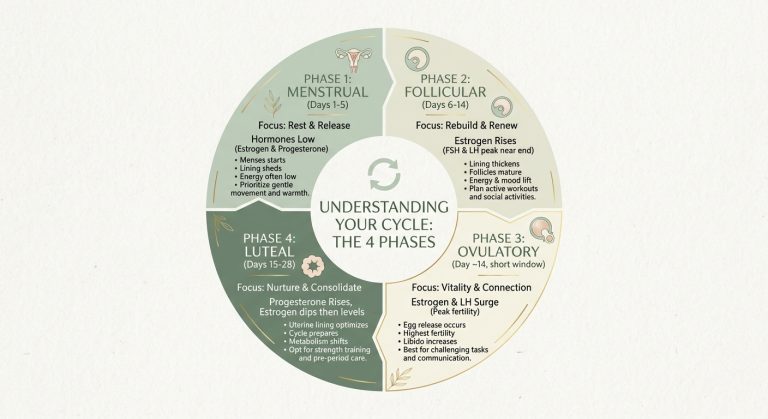
The menstrual cycle is broadly divided into two main phases, separated by the crucial event of ovulation:
| Cycle Phase | Hormonal Mechanism | Duration | Key Event |
| Follicular Phase | Follicle-Stimulating Hormone (FSH) matures ovarian follicles; Estrogen rises | Variable (~10–22 days) | Uterine lining thickens in preparation for potential egg implantation |
| Ovulation | Luteinizing Hormone (LH) surges | ~24–36 hours | Mature egg is released from the dominant follicle into the fallopian tube |
| Luteal Phase | Corpus luteum secretes Progesterone | Fixed (~12–14 days) | Progesterone stabilizes the uterine lining |
| Menstruation | Estrogen and Progesterone plummet | ~3–7 days | Uterine lining sheds if egg fertilization does not occur |
- The Follicular Phase: Begins on the very first day of your period and continues until ovulation occurs. Guided by follicle-stimulating hormone (FSH) released from the pituitary gland, several ovarian follicles begin maturing. As these follicles grow, they produce rising levels of estrogen, which thickens the lining of the uterus (endometrium). The duration of the follicular phase is naturally variable and represents the specific phase most susceptible to lifestyle disruption, stress, and medical imbalances.
- Ovulation: Triggered by a rapid surge in luteinizing hormone (LH), the dominant ovarian follicle ruptures and releases a mature egg into the fallopian tube.
- The Luteal Phase: Following egg release, the collapsed follicle transforms into a temporary endocrine gland called the corpus luteum. The corpus luteum produces progesterone, which matures and stabilizes the uterine lining.
The luteal phase has a remarkably consistent duration of approximately 12 to 14 days for most individuals Amenorrhea: Symptoms and Causes. If fertilization does not occur, the corpus luteum breaks down, causing progesterone and estrogen levels to drop rapidly. This hormonal drop triggers the shedding of the uterine lining, which presents as your period.
Because the luteal phase remains strictly fixed in length, a delayed period is almost always caused by a delayed follicular phase or a complete failure to ovulate (an anovulatory cycle). If stress or illness delays your ovulation from Day 14 to Day 21 of your cycle, your period will naturally arrive seven days later than you originally anticipated.
Step 1: Confirming Your Pregnancy Test Result
Before exploring non-pregnancy medical causes for a delayed cycle, it is crucial to verify that your home pregnancy test result is accurate and definitive.
Over-the-counter home pregnancy tests function by detecting human chorionic gonadotropin (hCG), a hormone produced by placental tissue shortly after a fertilized egg implants into the uterine wall Stopped or Missed Periods.
Common Causes of False Negative Tests
- Testing Too Early: Implantation typically takes place 6 to 12 days after successful fertilization. If you ovulated later in your cycle than usual, hCG levels may not yet have reached the minimum threshold required for detection on standard urine test strips.
- Diluted Urine Concentration: Consuming large quantities of water or other fluids prior to testing can dilute the concentration of hCG in your urinary bladder, potentially leading to a false negative reading.
- Incorrect Reading Window: Checking the test results too quickly or reading the test long after the manufacturer’s suggested timeframe can obscure faint positive indicator lines or produce misleading evaporation lines.
Best Practices for Retesting: Late Period But Not Pregnant
If your period remains absent and you have engaged in condomless sexual intercourse during the preceding weeks, repeat a home pregnancy test in 3 to 5 days using your first morning urine, which contains the highest concentration of hCG. If your retests remain consistently negative, you can calculate future expected cycle dates using our interactive Period Calculator while reviewing the potential health factors detailed below.
10 Common Reasons Your Period Is Late (That Aren’t Pregnancy)
1. Psychological Stress and Anxiety
Severe emotional, psychological, or situational stress is among the most frequent clinical causes of a delayed period. When you experience intense anxiety, grief, academic pressure, financial strain, or major life transitions, your central nervous system activates its primary stress response mechanism: the hypothalamic-pituitary-adrenal (HPA) axis Common causes.
Activation of the HPA axis triggers elevated systemic levels of cortisol and corticotropin-releasing hormone (CRH). High circulating cortisol directly suppresses the pulsatile release of Gonadotropin-Releasing Hormone (GnRH) from the hypothalamus.
Without regular GnRH pulses, the anterior pituitary gland cannot secrete sufficient FSH and LH to signal the ovaries As a consequence, follicular maturation slows down or pauses entirely, postponing ovulation and delaying your expected menstrual flow. To learn more about how physical and emotional stress impact reproductive signaling.
2. Rapid Weight Loss or Restrictive Dieting
Substantial weight loss over a brief period, severe daily caloric restriction, or eliminating essential dietary macronutrients can send a clear signal to your brain that environmental energy conditions are unsafe for reproduction.
Body fat (adipose tissue) functions as an active endocrine organ that synthesizes estrogen and converts precursor hormones. Additionally, adipose tissue secretes leptin, a vital satiety hormone that communicates metabolic energy sufficiency directly to the hypothalamus Endocrine Society – Polycystic Ovary Syndrome (PCOS).
When body fat drops below a critical threshold or daily energy intake falls significantly short of physiological needs, circulating leptin levels drop precipitously. The hypothalamus interprets low leptin as a biological starvation state, conserving energy for survival mechanisms (such as cardiac function and body temperature regulation) while shutting down non-essential reproductive processes. This physiological shutdown is known as functional hypothalamic amenorrhea (FHA).
3. Sudden Weight Gain and Insulin Sensitivity Shifts
Just as rapid weight reduction can alter reproductive signaling, rapid weight gain can similarly disrupt menstrual regularity. Rapid increases in adipose tissue can lead to an overproduction of peripheral estrogen, creating an imbalanced hormonal feedback loop that alters normal ovarian function.
Furthermore, swift weight gain is frequently linked with acute reductions in insulin sensitivity. Elevated circulating insulin levels can stimulate the ovarian stroma to produce excess androgenic hormones (such as testosterone). Increased local androgens hinder normal follicle maturation, causing delayed ovulation or irregular cycle intervals.
4. Excessive Exercise and Low Energy Availability (RED-S)
Engaging in intense athletic training, endurance sports, or frequent high-intensity workouts without consuming adequate calories to balance physical output creates a medical state known as Relative Energy Deficiency in Sport (RED-S) or low energy availability (LEA).
Energy availability reflects the dietary energy remaining for normal physiological metabolic functions after subtracting the energy expended during athletic training:
When energy availability falls below approximately 30 kcal per kilogram of fat-free mass daily, the brain’s reproductive axis reduces hormonal output. This energy-preservation adaptation postpones egg release, leading to prolonged cycle lengths or complete cessation of periods in active individuals.
5. Polycystic Ovary Syndrome (PCOS)
Polycystic Ovary Syndrome (PCOS) is one of the most common endocrine conditions affecting individuals of reproductive age worldwide. PCOS is characterized by a complex combination of hormonal, metabolic, and reproductive disturbances.
In individuals with PCOS, the ovaries typically synthesize higher levels of androgens, and baseline LH levels are elevated relative to FSH. This hormonal imbalance prevents fluid-filled ovarian follicles from maturing to the point of egg release. Instead of rupturing during ovulation, multiple small, immature follicles remain preserved in the ovaries.
Because ovulation occurs infrequently or not at all (anovulation), the normal monthly buildup and shedding of the uterine lining becomes disrupted, causing delayed periods, oligomenorrhea (fewer than 9 periods annually), or extended amenorrhea
Read our detailed clinical breakdown of PCOS Symptoms and Irregular Periods for more information on diagnostic criteria and management strategies. If you are navigating PCOS-related cycle irregularities, structured symptom and habit tracking with our printable PCOS Wellness Planner can help you organize lifestyle habits and monitor personal cycle trends over time.
6. Thyroid Dysfunction (Hypothyroidism or Hyperthyroidism)
The thyroid gland, situated at the front of the neck, produces thyroid hormones (thyroxine/T4 and triiodothyronine/T3) that regulate metabolic speed across every organ system in the body. Thyroid hormones interact directly with sex-hormone-binding globulin (SHBG), the pituitary gland, and ovarian receptors.
- Hypothyroidism (Underactive Thyroid): Characterized by inadequate thyroid hormone production and elevated Thyroid-Stimulating Hormone (TSH). High serum TSH often triggers excess secretion of thyrotropin-releasing hormone (TRH), which stimulates elevated prolactin production. Excess prolactin directly inhibits GnRH release, blocking ovulation and delaying periods [External Reference: Mayo Clinic – Amenorrhea: Symptoms and Causes].
- Hyperthyroidism (Overactive Thyroid): Excessive circulating T3 and T4 levels increase systemic SHBG concentrations, lowering the concentration of biologically active free estrogen. This altered hormonal state disrupts normal follicular growth, leading to abnormally light, infrequent, or delayed menstrual bleeding [External Reference: Mayo Clinic – Amenorrhea: Symptoms and Causes].
Evaluation of thyroid function requires a routine blood panel measuring serum TSH, free T3, and free T4 levels.
7. Starting, Stopping, or Changing Birth Control
Exogenous hormonal contraceptives—including oral birth control pills, hormonal intrauterine devices (IUDs), subdermal implants, patches, and vaginal rings—alter endogenous hormone production to prevent pregnancy. Adjusting these medications commonly causes temporary or persistent changes to bleeding patterns:
- Discontinuing Oral Contraceptives: When you stop taking birth control pills, your brain’s communication network with your ovaries must naturally reactivate. It can take 3 to 6 months for regular endogenous ovulation to resume—a physiological adjustment window termed post-pill amenorrhea.
- Hormonal IUDs and Implants: Progestin-releasing contraceptive devices continuously thin the endometrial lining (endometrial atrophy). Over time, this thinned lining results in significantly lighter bleeding or stops periods altogether, which is a safe and expected pharmaceutical effect.
- Emergency Contraceptive Pills: Taking morning-after pills containing levonorgestrel or ulipristal acetate temporarily delays follicular rupture, which can push your subsequent menstrual period back by several days or weeks.
8. Perimenopause or Primary Ovarian Insufficiency
Perimenopause represents the natural biological transition leading toward menopause, during which ovarian follicle reserves gradually decrease. While perimenopause typically begins during an individual’s 40s, early perimenopause can commence in the late 30s.
Throughout perimenopause, communication between the pituitary gland and the ovaries becomes irregular. Estrogen levels rise and fall unpredictably, and cycles are frequently anovulatory. This hormonal instability leads to extended cycle lengths, skipped periods, or alternating episodes of light and heavy bleeding.
If menstrual periods cease entirely before age 40, a physician will evaluate for primary ovarian insufficiency (POI), a clinical condition where ovarian follicular function declines prematurely.
9. Recent Acute Illness, Infections, or Systemic Strain
Undergoing a brief episode of significant physiological strain—such as influenza, COVID-19, high fever, severe gastrointestinal infection, or recovery from surgical procedures—can temporarily delay ovulation.
During acute illness, systemic inflammatory cytokines (such as interleukin-6 and TNF-alpha) increase significantly. The immune system prioritizes energetic resources toward bodily defense and cellular repair rather than reproductive processes. If severe illness coincides with the early follicular phase of your cycle, ovarian follicle development slows down, causing your period to arrive several days or weeks late.
10. Chronic Health Conditions and Specific Medications
Several long-term systemic medical conditions and prescription pharmaceuticals can influence menstrual regularity:
- Unmanaged Diabetes Mellitus: Persistent blood glucose spikes and hyperinsulinemia can impair ovarian steroidogenesis and disrupt delicate pituitary signaling, delaying ovulation.
- Unmanaged Celiac Disease: Active celiac disease triggers chronic inflammation and nutrient malabsorption within the small intestine. The resulting nutritional deficiencies and low body weight can suppress reproductive hormone synthesis.
- Prescription Medications: Drugs that increase prolactin levels or alter central neurotransmitter activity—such as selective serotonin reuptake inhibitors (SSRIs), antipsychotics, antihypertensives, and chemotherapy drugs—can interfere with normal ovulation schedules.
Comparison Table: Causes, Mechanisms, and Distinctive Symptoms
The comparison table below outlines the primary mechanisms, key physical characteristics, and typical cycle impacts across non-pregnancy causes of a delayed period:
| Cause | Primary Mechanism | Key Physical Symptoms | Typical Impact on Cycle |
| Psychological Stress | Cortisol elevation suppresses GnRH and LH release | Anxiety, insomnia, tension headaches, muscle fatigue | 3–14 day delay; normalizes once stress subsides |
| PCOS | Excess androgens halt follicle maturation | Cystic acne, hirsutism, scalp thinning, weight shifts | Chronic irregular, extended, or skipped cycles |
| Hypothyroidism | Elevated TRH raises prolactin, blocking GnRH | Cold intolerance, weight gain, constipation, dry skin | Delayed, heavy, or completely absent bleeding |
| Functional Amenorrhea | Low leptin shuts down HPO axis activity | Low resting heart rate, hair thinning, low libido | Multi-month absence of bleeding (amenorrhea) |
| Birth Control Changes | Synthetic hormones suppress native ovulation | Light spotting, breast tenderness, light withdrawal bleeding | 1–6 month transition or absent periods |
| Perimenopause | Ovarian follicle depletion alters estrogen production | Hot flashes, night sweats, vaginal dryness, sleep shifts | Unpredictable, skipping, or prolonged cycles |
Secondary Amenorrhea vs. Irregular Cycles: Understanding the Difference
It is medically valuable to distinguish between a slightly delayed period and a formal diagnosis of secondary amenorrhea.
- Irregular or Delayed Period: Occurs when your cycle length varies by more than 7 to 9 days from your normal baseline, but menstrual bleeding still occurs periodically. Occasional cycle delays are common throughout reproductive life and usually resolve once temporary stress or lifestyle factors normalize.
- Secondary Amenorrhea: Defined clinically as the complete absence of menstrual bleeding for 3 consecutive months in individuals who previously experienced regular periods, or for 6 consecutive months in individuals with a history of irregular cycles Secondary amenorrhea requires a systematic medical evaluation to identify underlying endocrine, metabolic, or structural factors.
If you are uncertain whether your cycle length variations reflect minor fluctuations or systemic irregularity, establishing your personal baseline using our Cycle Length Calculator can provide helpful data.
What Causes Period Cramps When No Bleeding Occurs?
Experiencing lower abdominal cramping, pelvic pressure, or premenstrual breast tenderness without any menstrual bleeding can feel confusing. This symptom combination typically arises from one of three distinct physiological mechanisms:
- Anovulatory Hormonal Fluctuations: Your ovaries developed a follicle and produced elevated estrogen levels—thickening the uterine lining and synthesizing localized uterine prostaglandins—but failed to achieve complete follicular rupture. These prostaglandins trigger uterine muscle contractions (cramps) even though progesterone levels have not dropped enough to initiate lining shedding.
- Delayed Ovulation: Ovulation occurred significantly later in your cycle than anticipated. The pelvic discomfort you feel may represent mid-cycle ovulatory discomfort (mittelschmerz) or early luteal phase prostaglandin activity, indicating that your period will likely arrive within several days.
- Pelvic Conditions or Anatomical Factors: Conditions such as benign uterine fibroids, cervical stenosis (narrowing of the cervical canal), or non-inflammatory ovarian cysts can produce localized pelvic pressure and cramping independently of menstrual flow.
Diagnostic Steps: What to Expect at Your Doctor’s Office
If your period is consistently delayed or has been missing for several months, scheduling a consultation with a healthcare professional (such as a gynecologist, general practitioner, or reproductive endocrinologist) is an important next step.
Initial Clinical Diagnostic Evaluation
- Serum hCG Blood Test: Measures exact circulating hCG levels with higher analytical sensitivity than urine test strips to definitively rule out early pregnancy.
- Comprehensive Thyroid Panel: Evaluates serum TSH, free T3, and free T4 to identify subclinical or clinical hypothyroidism or hyperthyroidism.
- Serum Prolactin Test: Checks for hyperprolactinemia caused by medications or benign pituitary microadenomas
- Gonadotropin Panel (FSH and LH): Assesses pituitary-ovarian signaling. High FSH levels relative to age suggest primary ovarian insufficiency, whereas low or suppressed FSH and LH levels point toward functional hypothalamic amenorrhea.
- Androgen Panel (Total Testosterone, DHEAS): Identifies elevated circulating androgens characteristic of Polycystic Ovary Syndrome.
- Metabolic Screen (Fasting Glucose, Fasting Insulin, HbA1c): Evaluates overall glucose metabolism and insulin resistance.
Pelvic Ultrasound Imaging
A transvaginal or pelvic ultrasound provides detailed structural imaging of pelvic anatomy. The ultrasound scan measures endometrial thickness and evaluates ovarian morphology, checking for polycystic appearance or structural ovarian cysts.
Progestin Withdrawal Challenge
Your physician may prescribe a short 7- to 10-day course of oral progestin (such as medroxyprogesterone acetate). If withdrawal bleeding occurs within days after completing the medication, it confirms that your uterine lining is intact and receiving adequate estrogen, confirming that anovulation is the primary cause of your delayed period.
How Late Is Too Late? Guidelines for Seeking Medical Care
While an isolated menstrual delay of a few days is rarely cause for medical concern, specific clinical criteria indicate when you should seek a professional healthcare evaluation.
Schedule a Non-Emergency Medical Appointment If:
- You have missed your period for 3 consecutive months (and are not pregnant)
- Your periods suddenly become highly unpredictable after years of consistent cycle regularity.
- Your menstrual period stops completely before age 40.
- You experience persistent pelvic discomfort, severe new acne, or unexpected facial hair growth.
- Your cycle has not returned 6 months after stopping oral contraceptive pills.
Seek Urgent or Emergency Medical Attention If You Experience:
- Severe, Unilateral Lower Abdominal Pain: May indicate an ectopic pregnancy, ruptured ovarian cyst, or ovarian torsion.
- High Fever Accompanied by Pelvic Pain or Foul-Smelling Discharge: May suggest acute pelvic inflammatory disease (PID).
- Sudden, Severe Headaches with Visual Disturbances: May point to a pituitary gland issue.
- Severe Dizziness, Fainting (Syncope), or Extreme Weakness: Signals potential internal bleeding or severe anemia.
Evidence-Based Lifestyle Steps to Support Cycle Regularity at Home
While underlying medical conditions require formal clinical treatment, adopting evidence-based lifestyle habits can support healthy pituitary-ovarian signaling and encourage cycle regularity:
1. Optimize Energy Availability and Nutrition
Ensure that your daily dietary caloric intake adequately matches your physical activity expenditure. Emphasize nutrient-dense whole foods containing complex carbohydrates, lean proteins, and essential fatty acids (found in avocados, olive oil, nuts, and seeds), which supply the necessary biochemical building blocks for steroid hormone production.
2. Manage Nervous System Stress
Incorporate evidence-backed stress management practices that help regulate cortisol secretion, such as daily breathwork, mindfulness meditation, restorative yoga, and consistent outdoor morning sunlight exposure. Aim for 7 to 9 hours of restorative sleep nightly to support optimal circadian hormone release.
3. Adjust Athletic Training Intensity
If rigorous athletic training has contributed to cycle delays, moderate your exercise volume and intensity. Incorporate rest days into your weekly routine and consider swapping high-intensity interval workouts for walking, swimming, or light resistance exercises until cycle regularity returns.
4. Track Personal Cycle Trends
Logging your cycle dates, physical symptoms, stress levels, and basal body temperature over several months provides practical data to share with your healthcare team. Utilizing a structured tool like our physical Ultimate Cycle Syncing & Menstrual Tracker can help you visualize long-term health patterns and recognize lifestyle triggers.
Key Takeaways: Late Period But Not Pregnant
- Ovulation Determines Timing: A late period with a negative pregnancy test is almost always caused by delayed or skipped ovulation.
- Confirm Test Accuracy: If pregnancy remains possible, re-test 3 to 5 days after a negative result using your first morning urine.
- Stress Impact: Acute or chronic emotional strain raises cortisol, which can temporarily suppress hypothalamic signaling and delay egg release.
- Metabolic Factors: Rapid weight loss, strict caloric deficits, low body fat, or high exercise volume can trigger functional hypothalamic amenorrhea.
- Hormonal Conditions: PCOS and thyroid dysfunction are common non-pregnancy causes of persistent cycle delays that respond well to medical management.
- Know When to Seek Care: Consult a physician if your period is missing for 3 consecutive months, or seek immediate emergency care if severe pelvic pain or fever occurs.
Medical Disclaimer
This content is for educational purposes only and is not a substitute for professional medical advice, diagnosis, or treatment. Always consult a qualified healthcare professional regarding your individual health needs, medical conditions, or diagnostic concerns.