
Normal Menstrual Cycle Length
Quick Summary: For healthy adult women, a normal menstrual cycle length ranges between 21 and 35 days, with 28 days representing a statistical population average rather than a medical rule. For adolescents, a wider range of 21 to 45 days is considered normal as the reproductive system matures. Cycle length is calculated from the first day of one period up to the first day of the next period. Slight variations of a few days from month to month are completely normal, but persistent cycles under 21 days, over 35 days, or missing for three consecutive months warrant a medical evaluation.
If you have ever opened a period-tracking app or looked at a calendar and wondered whether your cycle is “on time,” you are not alone. Many women grow up believing that every healthy body operates on an exact 28-day schedule. In reality, a rigid 28-day cycle is experienced by only a minority of individuals. Human biology is dynamic, and variations in cycle length are a natural response to changing hormone levels, age, lifestyle, and overall health.
Clinical organizations, including the American College of Obstetricians and Gynecologists (ACOG), recognize the menstrual cycle as a vital sign—a fundamental indicator of systemic health alongside blood pressure, pulse, and body temperature. Understanding what constitutes a normal cycle length for your body provides critical insight into your hormonal function, metabolic health, and ovulation status.
Whether your cycle arrives every 24 days, every 32 days, or fluctuates slightly from month to month, this guide breaks down the biological mechanisms behind cycle timing, how normal ranges evolve across your lifespan, common causes of variation, and when it is time to seek guidance from a medical professional.
How to Calculate Your Cycle Length Accurately
One of the most frequent points of confusion when discussing menstrual health is how to properly count the length of a cycle. Many people mistakenly count only the days they spend bleeding, or they begin counting from the day their bleeding stops.
In clinical medicine, your menstrual cycle length is defined as the total number of days from the first day of one menstrual period up to (but not including) the first day of your next menstrual period.
Step-by-Step Cycle Calculation Method
- Identify Day 1: Mark the first day you experience full, bright red menstrual flow. Spotting (light pink or brown fluid that requires only a panty liner) does not count as Day 1.
- Track Through the Month: Count every single day—including days of bleeding, non-bleeding days, and the days leading up to your next period.
- Mark the Next Day 1: Note the first day of full menstrual flow in your subsequent cycle.
- Calculate Total Days: The total number of days counted between your first Day 1 and your next Day 1 is your cycle length.
For example, if your period begins on March 1st and your next period begins on March 29th, your cycle length for that month is 28 days. If your next period begins on April 1st, that cycle length is 31 days.
To easily calculate your historical average across multiple months without manual math, you can use our interactive Cycle Length Calculator.
The Biological Engine: Four Phases of the Menstrual Cycle
To understand why cycle lengths vary, it is essential to examine the physiological machinery behind them. The menstrual cycle is governed by a complex communication loop between the brain (the hypothalamus and pituitary gland) and the ovaries, known as the hypothalamic-pituitary-ovarian (HPO) axis.
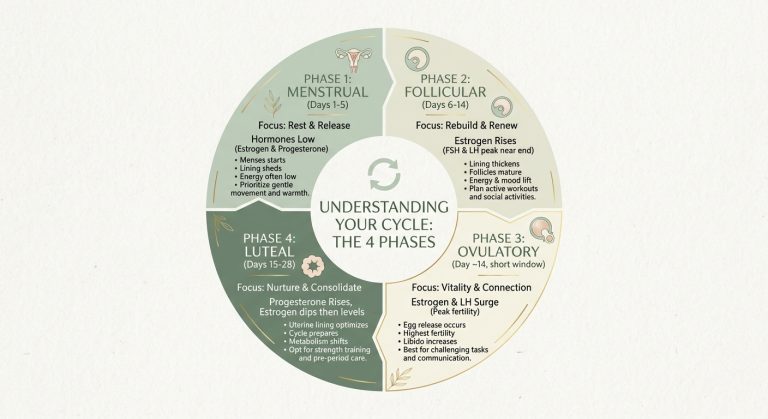
The cycle is divided into four distinct phases, each driven by fluctuating hormones:
| Phase | Primary Hormones | Typical Duration | What Is Happening in the Body |
| Menstrual Phase | Low Estrogen & Progesterone | 3–7 Days | The uterine lining (endometrium) sheds if pregnancy has not occurred. |
| Follicular Phase | Follicle-Stimulating Hormone (FSH) & Rising Estrogen | 10–22 Days (Variable) | Ovarian follicles mature; estrogen thickens the uterine lining. |
| Ovulation | Luteinizing Hormone (LH) Surge | 24–36 Hours | A mature egg is released from the dominant ovarian follicle. |
| Luteal Phase | Progesterone & Moderate Estrogen | 12–14 Days (Fixed) | The corpus luteum secretes progesterone to maintain the uterine lining. |
The Secret to Cycle Length Shifts: Follicular vs. Luteal Phase
When a menstrual cycle is longer or shorter than usual, the variation almost always occurs within the follicular phase.
- The Follicular Phase is Variable: Depending on stress, nutritional status, metabolic health, and sleep, your brain may signal the ovaries to mature an egg quickly (e.g., in 10 days) or slowly (e.g., in 20 days or more).
- The Luteal Phase is Fixed: Once ovulation takes place, the temporary gland left behind—the corpus luteum—has a strict lifespan. It secretes progesterone for approximately 12 to 14 days. If fertilization does not occur, progesterone levels fall rapidly, and your period arrives roughly two weeks post-ovulation.
Therefore, if your period is late or your overall cycle is longer than usual, it means your body took longer to ovulate, not that your luteal phase stretched out.
Normal Menstrual Cycle Length Across Different Life Stages
What is considered a “normal” cycle length shifts substantially over a woman’s lifetime. Ovarian hormone production follows a predictable curve from adolescence through the menopausal transition.
Adolescents and Teens (Ages 11–18)
- Normal Range: 21 to 45 days.
- Average Duration: ~32 days in early years post-menarche
When a young girl experiences her first period (menarche), her HPO axis is still biologically immature. The brain and ovaries are learning to coordinate the hormonal signals needed for regular ovulation.
During the first 2 to 3 years after menarche, as many as 50% of cycles may be anovulatory (meaning an egg is not released). Without ovulation, progesterone is not produced, causing cycle lengths to vary widely. A cycle length of 40 days followed by a 25-day cycle is entirely normal during adolescence.
Adults in Peak Reproductive Years (Ages 19–39)
- Normal Range: 21 to 35 days [External Reference: ACOG – Menstruation in Girls and Adolescents]
- Average Duration: ~28 to 30 days
By age 20, the neuroendocrine feedback loop between the brain and ovaries is fully mature. During these peak reproductive years, cycle lengths achieve their greatest stability. While an individual’s cycle may consistently sit at 24 days or 33 days, the key marker of health is intra-individual consistency—meaning your personal month-to-month variation should ideally remain within 7 to 9 days.
Perimenopause and Beyond (Ages 40+)
- Normal Range: Highly variable (can shorten to <21 days or lengthen to >45 days)
Beginning in a woman’s 40s (and occasionally late 30s), the pool of remaining ovarian follicles decreases. As follicular reserves decline, estrogen production fluctuates unpredictably, and FSH levels rise as the brain tries harder to stimulate the ovaries.
In early perimenopause, cycles often shorten (for example, moving from 28 days to 22 days) because elevated FSH causes faster follicular development. In late perimenopause, ovulation is frequently skipped, causing cycles to stretch out to 40, 60, or 90 days before bleeding completely stops (menopause).
What Is Considered an Irregular Cycle Length?
Medical guidelines define cycle irregularity based on specific parameters of timing and variation.
| Classification | Cycle Duration | Clinical Implication |
| Polymenorrhea | Shorter than 21 Days | Frequent bleeding; potential short follicular phase or anovulatory uterine bleeding. |
| Normal Adult Cycle | 21 to 35 Days | Physiological norm; indicates regular ovulatory activity. |
| Oligomenorrhea | Longer than 35 Days | Infrequent bleeding; suggests delayed ovulation or anovulation. |
| Secondary Amenorrhea | Absent for 90+ Days (3 months) | Absence of bleeding; requires clinical investigation. |
1. Polymenorrhea (Cycles < 21 Days)
Having a cycle that recurs every 18 or 20 days means you are menstruating too frequently. This can prevent the uterine lining from properly developing and can lead to iron deficiency anemia due to frequent blood loss. Causes include perimenopause, luteal phase defects, or anovulatory uterine bleeding.
2. Oligomenorrhea (Cycles > 35 Days)
When your cycle consistently stretches beyond 35 days (e.g., 40, 50, or 60 days between periods), it indicates that your ovaries are experiencing delayed follicular development or failing to release eggs regularly. Oligomenorrhea is a hallmark feature of endocrine conditions like Polycystic Ovary Syndrome (PCOS).
3. Secondary Amenorrhea (Absent Periods for 3+ Months)
If you previously had regular cycles and experience no menstrual bleeding for 3 consecutive months—or 6 months if you had historically irregular cycles—you meet the clinical definition for secondary amenorrhea. This condition requires a comprehensive medical workup.
4. High Month-to-Month Variation
Even if your cycle lengths stay between 21 and 35 days, significant unpredictability is considered irregular. For example, if your cycle is 22 days in January, 34 days in February, 21 days in March, and 35 days in April (a variance of 13 days), your cycle is classified as irregular [External Reference: NICHD – What causes menstrual irregularities?].
If you are noticing wide fluctuations in your monthly timing, estimating your next cycle with our Period Calculator can help you log dates to share with your healthcare provider.
Physiological and Lifestyle Factors That Alter Cycle Timing
Your reproductive system does not operate in isolation; it is deeply connected to your metabolic, nervous, and endocrine systems. Temporary changes in cycle length are frequently triggered by daily life events.
1. Psychological Stress and Cortisol
Severe or prolonged mental stress activates the hypothalamic-pituitary-adrenal (HPA) axis, resulting in high levels of circulating cortisol and corticotropin-releasing hormone (CRH.
High cortisol directly suppresses GnRH release in the brain. Without GnRH, the pituitary gland cannot release the LH and FSH needed to stimulate the ovaries. This delays ovulation, causing your period to arrive days or weeks late. For a deeper look into this biological mechanism.
2. Body Weight, Body Fat, and Energy Availability
Adipose tissue (body fat) plays a necessary role in hormone production by converting precursor hormones into estrogen and secreting leptin, a metabolic signal to the brain.
- Low Body Fat / Restrictive Dieting: If body fat falls too low or caloric intake is drastically restricted, leptin drops. The brain senses an energy deficit and shuts down reproductive function to conserve energy for survival, leading to delayed or absent cycles (functional hypothalamic amenorrhea).
- Rapid Weight Gain: Quick increases in body weight can lead to elevated peripheral estrogen production and insulin resistance, both of which can disrupt ovulation and alter cycle length.
3. High-Intensity Athletic Training
Engaging in rigorous, high-volume athletic training without adequate nutritional intake creates a state of Relative Energy Deficiency in Sport (RED-S) When physical exercise consumes more energy than dietary intake provides, the HPO axis downregulates, extending the follicular phase and delaying your period.
4. Travel, Circadian Disruptions, and Shift Work
The hypothalamus contains the body’s master circadian clock, which is sensitive to light-dark cycles and sleep patterns. Crossing multiple time zones (jet lag) or working overnight shift rotations alters melatonin and cortisol rhythms, which can briefly interrupt GnRH pulses and alter cycle timing for one or two months.
Medical Conditions That Affect Cycle Length
When cycle length shifts are persistent rather than temporary, an underlying medical condition may be affecting your hormone levels.
1. Polycystic Ovary Syndrome (PCOS)
PCOS affects up to 10% of women of reproductive age It is characterized by elevated androgen (male hormone) levels, insulin resistance, and anovulation. In PCOS, ovarian follicles begin to grow but fail to mature or release an egg, creating a characteristic “polycystic” appearance on ultrasound and causing long, unpredictable cycles (>35 days) or missing periods.
Read our complete breakdown of PCOS Symptoms and Irregular Periods for detailed information on symptom management. Individuals managing PCOS can also benefit from using a dedicated tool like our printable PCOS Wellness Planner to log symptoms and lifestyle habits alongside medical care.
2. Thyroid Disorders (Hypothyroidism and Hyperthyroidism)
The thyroid gland regulates overall systemic metabolism. Because thyroid hormones directly affect ovarian function and sex-hormone-binding globulin (SHBG), thyroid imbalances frequently cause cycle length alterations.
- Hypothyroidism (Underactive Thyroid): Elevated TSH levels can cause hyperprolactinemia, leading to longer, heavier cycles or skipped periods.
- Hyperthyroidism (Overactive Thyroid): Excess thyroid hormones can cause unusually short, light, or infrequent cycles.
3. Hyperprolactinemia
Prolactin is the hormone produced by the pituitary gland to stimulate breast milk production after childbirth. Elevated prolactin levels in a non-pregnant, non-lactating individual—often caused by stress, certain medications, or a benign pituitary tumor (prolactinoma)—suppresses GnRH, delaying ovulation and lengthening the menstrual cycle.
4. Primary Ovarian Insufficiency (POI)
Primary Ovarian Insufficiency occurs when the ovaries stop functioning normally before age 40. Unlike natural menopause, POI can cause fluctuating ovarian function where periods stop for several months, return temporarily, and then become increasingly sporadic.
5. Hormonal Contraceptives and Medications
Starting, stopping, or changing hormonal birth control directly impacts cycle timing.
- Oral Contraceptive Pills: Pill withdrawal bleeds are artificially controlled and usually occur every 28 days. After discontinuing the pill, it can take 3 to 6 months for your natural endogenous cycle length to re-establish (post-pill amenorrhea).
- Hormonal IUDs and Implants: Continuous progestin thins the uterine lining, leading to light, infrequent bleeding or complete absence of periods, which is clinically safe and expected.
- Prescription Medications: Antidepressants, antipsychotics, blood pressure drugs, and chemotherapy agents can alter neurotransmitters and prolactin levels, changing cycle length.
Diagnostic Evaluation: How Doctors Assess Irregular Cycle Lengths
If your cycle length consistently falls outside the 21- to 35-day window, a healthcare provider will conduct a structured clinical workup to identify the root cause.
- Medical History & Cycle Tracking: Your doctor will review your historical cycle lengths, recent life stressors, weight changes, exercise habits, and family history of endocrine disorders.
- Blood Biomarker Panels:
- hCG: To definitively rule out pregnancy.
- TSH and Free T4: To screen for thyroid dysfunction.
- Prolactin: To check for hyperprolactinemia.
- FSH and LH: To evaluate ovarian reserve and distinguish between central brain issues (FHA) and ovarian conditions (POI or PCOS).
- Total Testosterone and DHEAS: To check for elevated androgen levels.
- Pelvic Ultrasound: Provides high-resolution imaging of the ovaries to evaluate follicle count (antral follicle count) and assess endometrial lining thickness.
When to See a Healthcare Provider
While occasional variations of a few days are completely normal, certain symptoms indicate that it is time to schedule a medical evaluation.
Make a Non-Emergency Appointment If:
- Your cycles are consistently shorter than 21 days or longer than 35 days.
- Your period was previously regular but becomes unpredictable for more than 3 consecutive months.
- You experience no menstrual bleeding for 90 consecutive days (and are not pregnant).
- Your period suddenly stops before age 40.
- You experience heavy bleeding (soaking through a pad or tampon every hour for two consecutive hours).
- You notice new signs of hormonal imbalance, such as sudden facial hair growth, severe cystic acne, or unexplained hair thinning.
Seek Immediate Emergency Medical Care If:
- You experience severe, sharp, or sudden lower abdominal or pelvic pain [External Reference: ACOG – Amenorrhea: Absence of Periods].
- Heavy bleeding is accompanied by severe dizziness, lightheadedness, or fainting (syncope).
- You have a high fever, chills, and foul-smelling vaginal discharge.
- You suspect a potential ectopic pregnancy.
Evidence-Based Practices to Support Cycle Regularity
If medical conditions have been ruled out by your doctor, supporting your baseline physiological health can promote regular ovulatory cycles:
1. Maintain Adequate Energy Availability
Ensure your daily food intake supplies sufficient calories, macronutrients, and micronutrients to meet your activity demands. Avoid severe caloric restriction, and incorporate healthy fats (avocados, nuts, seeds, olive oil) necessary for steroid hormone synthesis.
2. Prioritize Sleep and Circadian Hygiene
Aim for 7 to 9 hours of uninterrupted sleep nightly. Keeping a consistent sleep schedule helps stabilize melatonin and cortisol secretion, supporting regular GnRH pulsatility in the brain.
3. Manage Chronic Nervous System Stress
Incorporate evidence-informed stress reduction techniques into your weekly routine, such as breathwork, yoga, progressive muscle relaxation, or spending time in nature, to reduce baseline cortisol levels.
4. Keep a Detailed Cycle Log
Consistently logging your cycle dates, physical symptoms, mood changes, and cervical mucus gives you a clear understanding of your personal health baseline. Using a physical, paper-based log like our Ultimate Cycle Syncing & Menstrual Tracker allows you to easily track patterns across multiple months and share organized data with your physician.
Key Takeaways
- Normal Adult Range: A normal menstrual cycle length for adults is 21 to 35 days (21 to 45 days for adolescents).
- Calculation Method: Count from Day 1 of full flow in one period up to Day 1 of the next period.
- Follicular Phase Flexibility: Cycle length variations almost always occur because the body took more or less time to ovulate during the follicular phase; the luteal phase remains fixed at ~12–14 days.
- Age Matters: Cycles are naturally more variable during adolescence and perimenopause due to maturing or declining hormonal feedback loop.
- Lifestyle Triggers: Stress, weight changes, low energy availability, and travel can temporarily shift cycle length by altering brain signaling.
- Clinical Evaluation: Consult a healthcare provider if cycles are consistently under 21 days, over 35 days, missing for 3 months, or accompanied by severe symptoms.