
Why Is My Period Early?
Quick Answer: An early period usually happens because ovulation occurred sooner than expected during your cycle’s follicular phase, or because you experienced an anovulatory cycle (a cycle without egg release). Common triggers include psychological stress, starting or stopping hormonal birth control, taking emergency contraception, weight shifts, thyroid imbalances, or perimenopause. While an isolated early cycle is usually harmless, bleeding that recurs more often than every 21 days warrants evaluation by a healthcare provider.
Looking down to discover that your period has arrived several days or even a week earlier than expected can catch you completely off guard. Whether you were planning a weekend trip, managing a busy work schedule, or tracking your fertile window, an early cycle often brings immediate questions: Why did this happen? Is my hormone system out of balance? Could I actually be experiencing early pregnancy spotting?
It is completely natural to feel concerned when your body strays from its expected rhythm. However, human reproductive biology is inherently dynamic. While population averages often point to a textbook 28-day schedule, healthy menstrual cycles regularly fluctuate in length. Your menstrual cycle serves as a sensitive vital sign that actively responds to stress, nutrition, sleep, medication, and routine lifestyle changes.
This comprehensive guide explains what medically counts as an early period, how cycle timing works behind the scenes, how to distinguish an early period from light spotting or early pregnancy bleeding, nine common reasons for an early arrival, and clear guidelines on when to consult a physician.
What Counts as an Early Period?
To determine whether your period is truly early, it helps to establish your baseline cycle length.
Your menstrual cycle length is measured from the first day of full menstrual flow in one period up to (but not including) the first day of full menstrual flow in your next period. ACOG.
| Clinical Metric | Healthy Adult Baseline | Early Cycle Threshold |
| Standard Cycle Length | 21 to 35 days | Shorter than 21 days (Polymenorrhea) |
| Normal Month-to-Month Variance | Within 2 to 7 days | Arriving 7+ days sooner than your usual baseline |
| Typical Bleeding Duration | 2 to 7 days | Variable; may be shorter or lighter if anovulatory |
In healthy adult women, a cycle length anywhere between 21 and 35 days is considered clinically normal. If your cycle typically lasts 28 days and your period arrives on Day 26, that 2-day variation falls well within a healthy physiological range.
However, if your period arrives 7 or more days earlier than your usual baseline, or if your full cycle length drops below 21 days (a pattern known clinically as polymenorrhea), your cycle is officially considered early.
If you are unsure whether your recent cycle dates represent a minor shift or a true irregularity, you can calculate your personal baseline average using our interactive Cycle Length Calculator.
How Your Menstrual Cycle Determines Period Timing
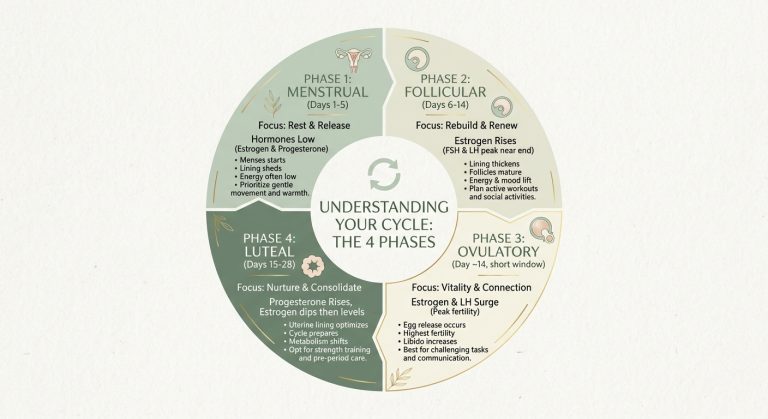
Understanding why a period arrives early requires a quick look at the two distinct phases of your cycle, separated by ovulation:
- The Follicular Phase (Variable Duration): Begins on Day 1 of your period and continues until ovulation. Under the influence of follicle-stimulating hormone (FSH) and rising estrogen, an ovarian follicle matures. The length of this phase is highly flexible and sensitive to external stressors.
- The Luteal Phase (Fixed Duration): Begins immediately after ovulation. The collapsed follicle forms the corpus luteum, which secretes progesterone to stabilize the uterine lining. In most healthy individuals, the luteal phase lasts a remarkably consistent 12 to 14 days.
Because the luteal phase stays fixed at roughly two weeks, the timing of your ovulation determines when your period arrives.
If your brain signals your ovaries to mature and release an egg on Day 7 instead of Day 14, your luteal phase will still run its usual 14-day course, causing your period to arrive on Day 21—a full week earlier than expected.
Alternatively, if your body skips ovulation entirely (an anovulatory cycle), progesterone levels never rise to stabilize the uterine lining. Without progesterone support, the endometrial lining can become unstable and shed prematurely, leading to early or unexpected bleeding.
Early Period vs. Spotting vs. Implantation Bleeding: How to Tell
Before assuming your early bleeding is a full menstrual period, it is crucial to evaluate the characteristics of the flow. Light mid-cycle bleeding can sometimes be mistaken for an early period.
| Feature | Early Menstrual Period | Intermenstrual Spotting | Implantation Bleeding |
| Flow Volume | Medium to heavy; requires regular pad/tampon changes | Very light; requires only a panty liner | Extremely light; faint smearing or mild spotting |
| Fluid Color | Bright red, dark red, or deep brown | Light pink, brown, or rust-colored | Light pink or pale brown |
| Duration | 3 to 7 days | 1 to 2 days (often intermittent) | 1 to 3 days max |
| Associated Symptoms | Menstrual cramps, lower back ache, bloating | Minimal to no cramping | Very mild uterine twinges, light fatigue |
| Timing | 7+ days before expected period | Mid-cycle (near ovulation) or sporadic | 6 to 12 days after conception (near period due date) |
Could It Be Implantation Bleeding?
If you are sexually active and trying to conceive—or experienced a recent condom barrier slip—light bleeding that occurs a few days before your expected period could be implantation bleeding. This happens when a fertilized egg attaches to the blood-rich uterine lining, roughly 6 to 12 days after fertilization.
Unlike a period, implantation bleeding remains very light, does not fill a pad or tampon, and lasts only a day or two. If you suspect you might be pregnant, wait until the day your period was originally due and take a home test, or estimate your timeline using our Pregnancy Calculator.
9 Common Reasons Your Period Is Late or Early
If you have confirmed that your bleeding is a full menstrual flow arriving ahead of schedule, one of the following physiological, environmental, or medical factors is likely the underlying cause.
1. Psychological or Physical Stress
Severe or sudden mental strain—such as job changes, family emergencies, academic exams, or emotional grief—activates your body’s central stress response system: the hypothalamic-pituitary-adrenal (HPA) axis.
This activation increases circulating cortisol and corticotropin-releasing hormone (CRH). Elevated cortisol disrupts the delicate pulsatile release of Gonadotropin-Releasing Hormone (GnRH) from the hypothalamus. Depending on when stress hits during your cycle, this hormonal disruption can cause early follicular recruitment (triggering early ovulation) or cause the uterine lining to break down prematurely without ovulation.
2. Starting, Stopping, or Missing Birth Control
Hormonal contraceptives—including oral birth control pills, hormonal intrauterine devices (IUDs), contraceptive patches, vaginal rings, and the arm implant—regulate bleeding by introducing synthetic progestin and estrogen.
- Starting or Changing Birth Control: During the first 3 to 6 months of starting a new hormonal contraceptive, breakthrough bleeding or an early period is very common as your uterine lining adjusts to synthetic hormone levels.
- Missing Oral Pills: Forgetting to take two or more combined birth control pills—or taking a progestin-only mini-pill more than a few hours late—causes a rapid drop in circulating synthetic hormones. This sudden hormone drop triggers a hormone-withdrawal bleed, causing an early period.
- Discontinuing Birth Control: Stopping hormonal birth control can cause temporary bleeding variations for several months as your natural endogenous ovulatory rhythm re-establishes itself.
3. Emergency Contraception (The Morning-After Pill)
Taking emergency contraceptive pills (such as levonorgestrel-based pills like Plan B, or ulipristal acetate pills like Ella) delivers a concentrated dose of synthetic hormones designed to delay egg release.
A major side effect of emergency contraception is an altered menstrual schedule. Depending on where you were in your cycle when you took the pill, your next period may arrive several days earlier or later than expected. You may also experience light intermenstrual spotting in the days immediately following use.
4. Perimenopause or Early Reproductive Transitions
Perimenopause is the natural transitional phase leading up to menopause, typically beginning in a woman’s 40s (though it can start in the late 30s).
During perimenopause, ovarian egg reserves naturally diminish, causing communication between the pituitary gland and ovaries to become erratic. Follicle-Stimulating Hormone (FSH) levels often rise in an attempt to stimulate the ovaries, which can cause follicles to mature rapidly. This shortened follicular phase frequently reduces cycle length from 28 days down to 21 or 24 days, leading to frequent early periods.
5. Weight Fluctuations and Caloric Shifts
Rapid weight loss, severe caloric restriction, or sudden weight gain can alter peripheral hormone conversion and metabolic signaling.
Fat tissue (adipose tissue) acts as an active endocrine organ, producing estrogen and secreting leptin, a key protein that signals energy availability to the brain. Sudden shifts in body fat or caloric availability alter leptin signaling, which can disturb the HPO axis and lead to premature endometrial shedding or unpredictable, early bleeding.
6. High-Intensity Exercise or Overtraining
Engaging in sudden, grueling physical exercise or endurance training without consuming sufficient calories creates a condition known as Low Energy Availability (LEA) or Relative Energy Deficiency in Sport (RED-S).
When the energy required for physical exertion exceeds dietary intake, the brain perceives a physiological stress state. While chronic energy deficits often cause missing periods (amenorrhea), acute shifts in workout intensity can cause short-term hormonal instability, triggering early or anovulatory bleeding.
7. Thyroid Dysfunction (Hyperthyroidism or Hypothyroidism)
The butterfly-shaped thyroid gland located at the front of your neck produces thyroid hormones (T3 and T4) that govern systemic metabolic speed. Thyroid hormones interact directly with ovarian receptors and sex-hormone-binding globulin (SHBG).
- Hyperthyroidism (Overactive Thyroid): Produces excess thyroid hormone, which elevates SHBG levels. This can shorten cycle lengths, causing periods to arrive earlier and lighter than usual.
- Hypothyroidism (Underactive Thyroid): Inadequate thyroid hormone elevates Thyroid-Stimulating Hormone (TSH) and prolactin, which can cause anovulatory cycles that manifest as frequent, heavy, or unexpected bleeding.
A simple blood test measuring serum TSH, free T3, and free T4 can evaluate whether thyroid function is affecting your cycle timing.
8. Polycystic Ovary Syndrome (PCOS) or Anovulatory Bleeding
Polycystic Ovary Syndrome (PCOS) is a common endocrine condition characterized by elevated androgens (male hormones), insulin resistance, and ovulatory disruption.
While PCOS is most famous for causing delayed or missing periods, it can also cause frequent, early bleeding. In anovulatory PCOS cycles, the uterine lining thickens continuously under the influence of uncoordinated estrogen. Without progesterone from ovulation to hold the lining together, parts of the endometrial wall become unstable and break down unpredictably, presenting as an early, heavy period.
9. Recent Illness, Travel, or Circadian Disruptions
Undergoing a brief episode of acute physical illness—such as the flu, COVID-19, high fever, or gastrointestinal infection—causes systemic inflammation that temporarily alters ovarian signaling.
Similarly, long-distance travel across multiple time zones (jet lag) or working rotating overnight shifts disrupts the master circadian clock located in the brain’s suprachiasmatic nucleus. Because circadian rhythms help regulate nocturnal LH and cortisol release, sudden schedule shifts can cause your body to ovulate earlier than expected.
Why Is My Period Early: Summary of Early Period Causes & Characteristics
| Cause | Primary Physiological Mechanism | Expected Bleeding Flow | Associated Symptoms |
| Psychological Stress | Cortisol surges suppress GnRH pulsatility | Light to medium; variable duration | Anxiety, insomnia, tension headaches |
| Birth Control Shifts | Synthetic hormone drop triggers withdrawal bleed | Light spotting to normal flow | Mild cramping, breast tenderness |
| Emergency Contraception | High-dose progestin delays/alters ovulation | Variable; light to unexpectedly heavy | Nausea, fatigue, lower abdominal discomfort |
| Perimenopause | High FSH accelerates follicular development | Can alternate between light and heavy | Hot flashes, night sweats, mood shifts |
| Thyroid Imbalance | SHBG and prolactin shifts alter ovarian response | Abnormally light or heavy frequent flow | Weight shifts, temperature sensitivity, fatigue |
| Anovulatory PCOS | Unopposed estrogen creates unstable lining | Unpredictable; often prolonged or heavy | Acne, hirsutism, insulin resistance |
Red Flag Symptoms: When to See a Healthcare Provider
An isolated early period that occurs once or twice a year is usually a harmless biological adjustment and rarely cause for concern. However, specific clinical symptoms indicate that it is time to schedule a medical evaluation.
| Non-Emergency Appointment | Emergency Medical Attention |
|---|---|
| • Cycles consistently under 21 days | • Soaking 2+ pads/hour for 2+ hours |
| • Bleeding lasts longer than 8 days | • Severe, sharp lower pelvic pain |
| • Bleeding after sexual intercourse | • Dizziness, fainting, or confusion |
| • Spotting between regular cycles | • Heavy bleeding with a high fever |
| • Postmenopausal vaginal bleeding | • Heavy bleeding while pregnant |
Schedule a Non-Emergency Appointment If:
- Your cycle length is consistently shorter than 21 days across three or more consecutive months.
- Your bleeding lasts longer than 8 consecutive days.
- You experience unexpected bleeding or spotting after sexual intercourse.
- You experience bleeding after you have already completed menopause (12 consecutive months without a period).
- You notice accompanying signs of hormonal imbalance, such as sudden facial hair growth, severe cystic acne, or unexplained hair loss.
Seek Immediate Emergency Medical Care If:
- You are soaking through two or more maxi pads or tampons every hour for two or more consecutive hours.
- You experience severe, sharp, or sudden lower abdominal or pelvic pain.
- Your bleeding is accompanied by severe dizziness, lightheadedness, confusion, or fainting (syncope).
- You experience heavy vaginal bleeding alongside a high fever, chills, or foul-smelling discharge.
- You experience sudden heavy bleeding and suspect you may be pregnant (which can indicate an ectopic pregnancy or pregnancy complication).
How Healthcare Providers Evaluate Early or Frequent Bleeding
If you schedule an evaluation for frequent or early periods, your healthcare provider will perform a systematic clinical diagnostic workup to identify the root cause:
| Diagnostic Step | Clinical Focus | Primary Objective |
| Comprehensive Medical History | Cycle logs, lifestyle shifts, medication use | Establishes pattern, rules out drug interactions |
| Serum hCG Test | Quantitative pregnancy blood test | Definitively rules out early pregnancy or ectopic pregnancy |
| Complete Blood Count (CBC) | Hemoglobin and hematocrit levels | Evaluates for iron deficiency anemia from frequent bleeding |
| Thyroid & Prolactin Panel | Serum TSH, free T4, and prolactin levels | Identifies underlying thyroid disorders or hyperprolactinemia |
| Hormonal Evaluation | Day 3 FSH, LH, estradiol, and androgens | Checks for perimenopause, POI, or PCOS |
| Pelvic Ultrasound | Transvaginal imaging | Visualizes uterine lining thickness, fibroids, polyps, or ovarian cysts |
Evidence-Informed Steps to Support Cycle Regularity at Home
While medical conditions like thyroid disorders require professional treatment, daily lifestyle choices can support healthy hypothalamic function and reproductive hormone stability:
1. Maintain Adequate Energy Availability
Avoid extreme calorie restriction or skipping meals. Ensure your daily nutrition provides sufficient complex carbohydrates, lean protein, and essential fatty acids (such as avocados, nuts, seeds, and olive oil), which serve as crucial building blocks for steroid hormone synthesis.
2. Practice Active Stress Management
Incorporate daily stress-reduction practices shown to lower baseline cortisol levels, such as deep diaphragmatic breathing, mindfulness meditation, restorative yoga, or spending time in nature. Prioritize 7 to 9 hours of quality sleep per night to support natural circadian melatonin and cortisol rhythms.
3. Log Your Symptoms and Cycle Metrics
Consistently tracking your period start dates, flow volume, physical symptoms, and temperature shifts gives you clear data to spot patterns. Using a structured paper resource like our Ultimate Cycle Syncing & Menstrual Tracker allows you to log multi-month health trends to share directly with your doctor[cite: 2].
Key Takeaways
- Follicular Phase Shifts: An early period almost always occurs because ovulation happened sooner than expected, or because your body experienced an anovulatory cycle.
- Rule Out Spotting: Distinguish a true early period from light intermenstrual spotting or early pregnancy implantation bleeding.
- Common Triggers: Acute stress, birth control changes, emergency contraception, weight shifts, thyroid imbalances, and perimenopause are frequent causes.
- Normal Variation: An occasional early period once or twice a year is a normal biological fluctuation.
- When to Seek Care: Consult a healthcare provider if your cycles are consistently shorter than 21 days, last longer than 8 days, or are accompanied by severe pain or extreme bleeding.